
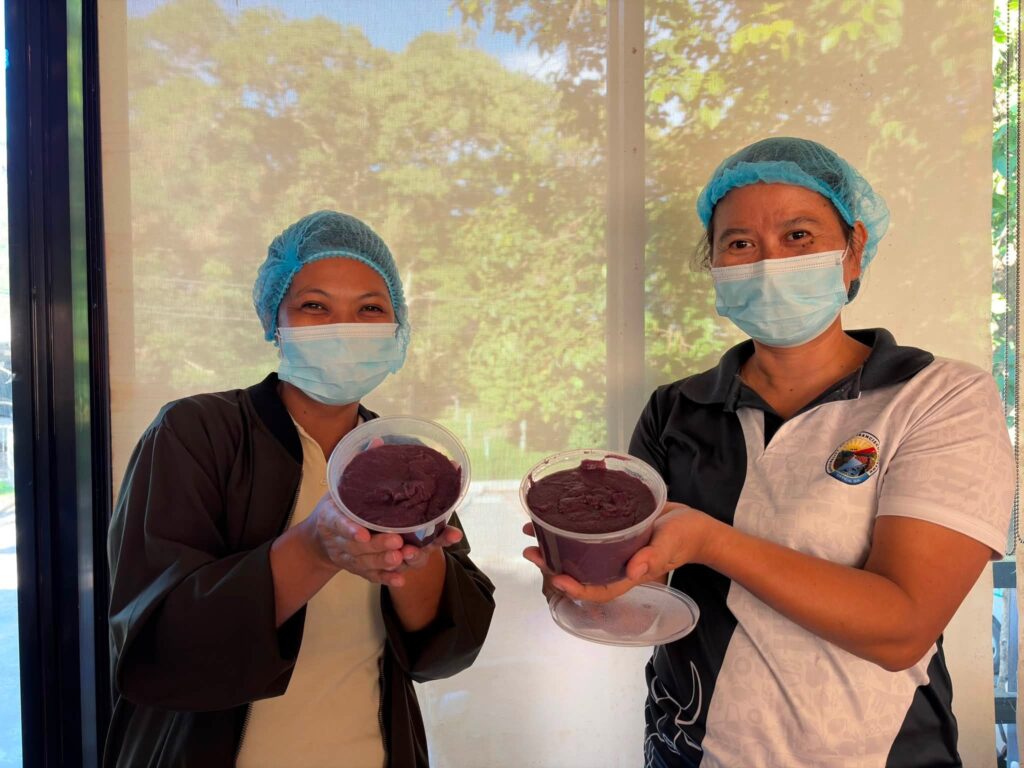
The global appetite for ube is creating a new opportunity for Philippine agriculture, but limited planting materials and fragmented production are forcing the industry to rethink how it scales.
Ube is no longer just a familiar ingredient in Filipino desserts.
The purple yam has become a growing international food trend, appearing in drinks, pastries, ice cream, and other products in overseas markets. That growing demand is now turning ube into something bigger: a potential high-value agricultural and export industry for the Philippines.
But there is a problem.
The country does not currently have enough planting material to expand production as quickly as demand is growing.
That supply gap is behind the Department of Agriculture’s decision to indefinitely suspend exports of fresh ube and its propagative planting materials. The Bureau of Plant Industry imposed the suspension in mid-August, covering fresh purple yam intended for consumption, planting, or research.
From Food Trend to Export Opportunity
The international popularity of ube has changed the commercial potential of the crop.
Philippine ube products are already reaching markets in Canada, the Middle East, and parts of Asia, while the United States, South Korea, and Europe are being eyed as additional growth markets. Demand is also expanding beyond fresh yam to products such as ube powder, halaya, jam, and paste.
That creates opportunities across the value chain.
Farmers can benefit from increased demand for raw ube. Processors can develop higher-value products. Exporters can tap overseas markets, while food manufacturers and restaurants can incorporate ube into new products.
The government itself has identified ube as a potential agricultural export winner.
In June, the Department of Agriculture said it was working with the Department of Trade and Industry and industry stakeholders to establish clearer standards, coordination, and export-ready systems for the sector.
Why Is the Government Restricting Fresh Exports?
The export suspension may seem unusual for a crop the Philippines wants to sell internationally.
The reason is supply.
Agriculture Secretary Francisco Tiu Laurel Jr. said the country severely lacks planting material and does not want Philippine ube varieties exported to countries that could potentially use them to establish competing production.
Ube is propagated using pieces of the tuber, meaning fresh material can potentially be used for planting.
The government’s immediate strategy is therefore to build up the domestic production base before pushing fresh exports further.
The suspension does not cover all ube products. Value-added products such as powdered ube, halaya, jam, and paste can still be exported.
That distinction could be important for Philippine food businesses looking to capitalize on international demand without relying solely on fresh produce exports.
The Industry Needs to Scale
The supply problem is not simply about growing more ube.
The industry also needs better coordination.
The DA previously said production systems and supply coordination remain uneven despite strong demand. Stakeholders have been pushing for clearer standards covering raw and processed ube, along with more consistent quality requirements for exporters.
A national organization, United Ube PH Association Inc., was also established this year, bringing together farmers, processors, traders, exporters, researchers, government agencies, and other stakeholders.
The group is working on strategies to strengthen the industry and develop market and institutional partnerships.
For businesses, stronger coordination could make it easier to secure raw materials, meet quality requirements, negotiate supply agreements, and serve international buyers.
₱300 Million Is on the Table
The government is also putting money behind the industry’s expansion.
President Ferdinand Marcos Jr. has approved a ₱300-million budget for the ube industry in 2027, with the DA planning measures to increase production and improve the availability of quality planting materials.
These efforts include tissue culture, community-based nurseries, and mini-set propagation techniques.
The government and researchers are also working on genetically mapping Philippine ube varieties. The initiative is intended to help protect native varieties, establish authenticity in export markets, and support the development of higher-yielding and more resilient varieties.
For an emerging agricultural industry, those investments could be important not just for increasing volume but for building a more reliable supply chain.
Supply Could Determine How Far Ube Goes
The global demand story is promising, but analysts have also pointed to the risks.
BMI, the research arm of Fitch Solutions, said persistent supply bottlenecks, limited farmland, and slow farmer adoption could prevent the ube industry from sustaining its current growth trajectory. It also noted that many farmers remain cautious about shifting their limited farmland to ube because of uncertainty about how long the current demand will last.
That creates a difficult business equation.
International buyers may be interested in Philippine ube, but businesses need reliable volumes and consistent quality before they can build long-term commercial relationships around the crop.
Without enough supply, the Philippines risks having demand grow faster than its agricultural capacity.
Where the Business Opportunity Could Be
The biggest opportunity may not be in exporting raw ube alone.
A stronger domestic value chain could allow Philippine businesses to capture more value through processing, packaging, manufacturing, branding, and finished food products.
Ube powder, paste, halaya, jams, frozen products, bakery ingredients, beverages, and other processed products can potentially travel farther and have longer commercial shelf lives than fresh produce.
That also opens opportunities for food manufacturers, exporters, restaurants, retailers, farmers’ cooperatives, and other businesses beyond the farm.
The government’s push to establish standards could further help Philippine businesses differentiate their products and protect the identity of Philippine ube in international markets. A Philippine national standard for fresh ube is being planned for 2027.
The Next Stage of the Ube Industry
The ube boom is now moving beyond social media and food trends.
It is becoming a question of agricultural capacity, supply chains, investment, standards, and international market access.
The Philippines already has something global consumers want. The challenge is building an industry capable of supplying that demand consistently while ensuring farmers and local businesses capture more of the value.
For Philippine agriculture, ube could become more than the next popular food flavor.
It could become a serious export business — if the country can solve the supply problem first.